


As we reflect on the events of 2025, we see both significant headwinds and continued opportunities for those committed to expanding stable, safe, and affordable housing in California and across the nation. Given the acute state of the housing and homelessness crisis, 2025 was defined by bipartisan policy movement, ongoing economic uncertainty, and renewed attention – at all levels of government – to the reforms needed to meet the scale of the challenge.
Despite the precariousness and uncertainty that have dogged 2025, our work continues to demonstrate that progress is possible when partnerships and political will align.
Federal Landscape: A Year of Both Volatility and Momentum
At the federal level, 2025 marked major shifts in housing and homelessness policy. The most notable development was bipartisan movement behind the ROAD to Housing Act, a sweeping reform package advanced by the Senate in late summer and folded into the National Defense Authorization Act (NDAA). The House plans to vote on the NDAA this Wednesday.
The bill proposes new tools to accelerate housing supply, including:
- New tools to accelerate housing supply through National Environmental Policy Act (NEPA) reform and a $1B Innovation Fund.
- Reforms to programs such as key housing programs HOME and CDBG, including adjustments to CDBG allocations based on a jurisdiction’s “housing growth improvement rate” and permanently authorizing HOME.
- Steps to simplify Housing Choice Voucher inspections and expand participation.
While the ROAD to Housing Act’s final passage remains uncertain, the effort reflects rare bipartisan agreement that the national housing shortage requires systemic, large-scale solutions.
At the same time, Congress continues negotiating the FY 2026 THUD budget, with the House advancing deep cuts to HUD while the Senate seeks to stabilize or increase core appropriations categories, in part by embedding ROAD provisions in the NDAA. These competing visions signal continued volatility heading into 2026, with direct implications for vouchers, homelessness funding, and affordable housing capital programs. The administration also shifted the federal homelessness strategy toward more temporary shelter interventions, limiting the amount of funding that Continuums of Care can use for Permanent Supportive Housing (PSH). This move could destabilize households currently residing in PSH, particularly in states like California, which are heavily invested in PSH. These actions will most likely increase homelessness in regions already impacted by a large number of people who are unhoused. HUD leadership changes and early-2025 agency restructuring added further uncertainty around federal implementation.
Amid these challenges, bipartisan collaboration persisted through the growing YIMBY Caucus, launched in late 2024 and expanding in 2025, which kept national attention on the housing supply crisis and reinforced housing production as an economic competitiveness issue.
California Policy and Budget Outlook: Balancing Constraints with Reform
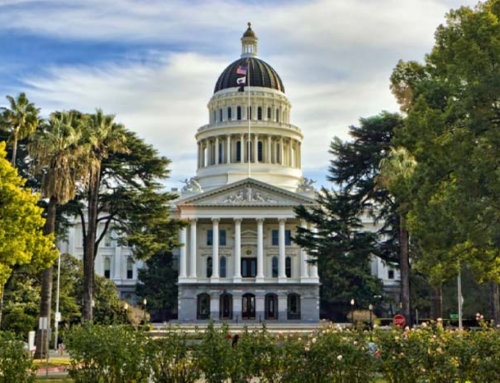
California’s 2025-26 fiscal outlook was shaped by another year of budget constraints, with the state facing a multi-year structural deficit and constrained fiscal capacity for new housing and homelessness investments. While some core programs were maintained, others were subject to delays or reduced allocations, continuing a trend of careful budget balancing.
At the same time, the Governor signed the Legislature’s Fast Track Housing Package to make housing more affordable by slashing red tape, removing uncertainty, and drastically diminishing the time it takes to get new housing projects approved, permitted, and built. The State additionally approved the creation of a new statewide housing agency, the California Housing and Homelessness Agency (CHHA), consolidating key functions across departments to align policy, financing, and implementation under a unified structure aimed at accelerating production and improving accountability. The new agency will become effective on July 1, 2026.
The 2024 election brought a new cohort of pro-housing leaders to the Legislature, and throughout 2025, these members played visible roles shaping committee priorities, advancing enforcement-oriented bills, and elevating production strategies. Looking ahead, Proposition 50, which redraws California’s congressional districts and was approved in November 2025, could likely accelerate state legislative vacancies, producing an unusually high number of open state legislative seats in 2026 as these members seek congressional seats. Stakeholders should prepare for a more volatile policymaking environment as a result.
Meanwhile, several high-stakes ballot initiatives in circulation could meaningfully reset the State’s housing, permitting, and local finance frameworks:
- State Homeownership Bond: sponsored by former Senate Majority Leader Bob Hertzberg, the ballot initiative proposes a statewide investment to support first-time buyers and expand access to entry-level homeownership.
- CEQA Reform: sponsored by the California Chamber of Commerce, this measure aims to reduce litigation abuse and streamline approvals.
- Limits on Local Taxes and Fees: the Howard Jarvis Taxpayers Association, a low-tax advocacy group, is currently gathering signatures to put a measure on the ballot to cap transfer taxes and raise the electoral support levels needed to approve taxes. This measure revisits a longstanding debate that last arose in 2024.
Entering 2026, the Legislature appears increasingly focused on how projects can be penciled for financial feasibility rather than simply where they can be built. The new Assembly Select Committee on Housing Finance and Affordability is expected to take a deeper look at cost drivers and the capital stack, while also placing parallel emphasis on innovation, insurance reform, and repurposing public land to unlock production at scale.
Local Innovations and Voter-Driven Solutions
Regional and local agencies made notable strides in 2025, demonstrating how voter-backed initiatives and new financing tools can expand California’s housing capacity. In Los Angeles County, the LA County Affordable Housing Solutions Agency (LACAHSA) advanced its first full year of operations under Measure A, establishing production pipelines, coordinating countywide funding, and supporting acquisition and preservation projects.
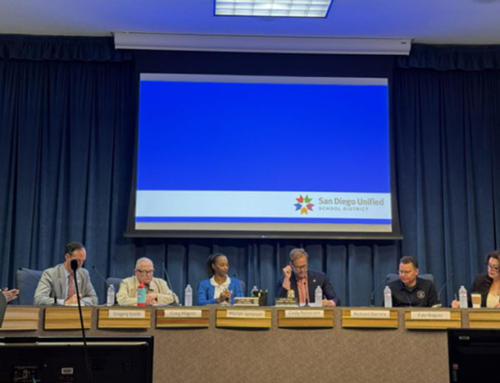
In May, the San Diego Unified School District (SD Unified), together with the San Diego Community College District (SDCCD), established and began operating a Regional Housing Finance Agency (RHFA) in accordance with SB 440 (Skinner, 2024), which authorizes local governments to establish RHFAs. Meanwhile, the Bay Area Housing Finance Agency (BAHFA) continued implementing its multibillion-dollar plan, investing in land acquisition, preservation, and mixed-income development across the nine-county Bay Area. Together, these regional authorities highlight a growing trend: voter-driven, regional housing finance agencies are emerging as key engines for workforce and affordable housing production in California.
Across the state, cities continued advancing innovative solutions such as adaptive reuse ordinances, public land activation strategies, and updated homelessness response plans aligned with state requirements. These local efforts will be increasingly critical in 2026, especially as federal funding uncertainties and state budget constraints place more responsibility on regional collaborations and local innovation.
Moving Forward to 2026
As we enter 2026, the policy landscape for housing and homelessness remains complex. Federal funding levels and program frameworks may shift depending on budget negotiations and evolving federal priorities. California faces continued fiscal challenges and political volatility but also maintains one of the most robust housing reform agendas in the nation.
We see several themes shaping the year ahead:
- Potential new federal rulemaking if the ROAD to Housing Act – or components of it – continue to advance.
- State focus on financing housing, either through ballot measures, the Assembly Select Committee on Housing Finance and Affordability, and/or increased streamlining of access to California’s affordable housing funding programs through the newly-established California Housing and Homelessness Agency (CHHA).
- Local and regional innovation, through continued implementation and development of Regional Housing Finance Agencies, infill and adaptive reuse, and leveraging commercial and public lands.
Amid fiscal uncertainty and policy churn, the demand for cross-sector collaboration, thoughtful strategy, and evidence-based policymaking has never been greater. The LeSar family of firms will continue working alongside partners at every level and across sectors to meet the moment with clarity, innovation, and commitment. Please reach out to discuss how we can support your business needs.
We look forward to continuing this work with you in 2026, and wish you and your loved ones a peaceful and restorative holiday season.
© LeSar Holdings/LeSar Development Consultants. All Rights Reserved. Please be advised that any republishing of copyrighted material provided by our organization, in whole or in part, requires prior written authorization. For permission, please reach out to [email protected]. We appreciate your understanding and compliance in upholding copyright laws.

Related Articles













About the Author