


Article Contributor: Jacqueline Woo, Senior Associate, Research & Policy, Global Policy Leadership Academy
As the Legislature reconvened for the second year of its two-year cycle, housing has continued to surface as a key area of focus. Over the past two months, lawmakers have navigated high-profile policy debates, fiscal constraints, and emerging innovation strategies that together signal both the limits and the possibilities shaping California’s 2026 housing agenda. From the defeat of another rent regulation proposal to the advancement of a multibillion-dollar affordable housing bond and renewed attention to construction innovation, the Capitol’s recent activity offers an early snapshot of where the housing debate is headed this year.
Second-year Bill Updates
While numerous bills have been introduced ahead of the February 20 new-bill introduction deadline, notable second-year bills have been debated during legislative hearings. Assembly Judiciary Committee Chairman Ash Kalra’s (D-San Jose) rent regulation bill, AB 1157, failed for the second time and is now dead for the remainder of the session. Strong opposition from the California Apartment Association and the Building Industry Association led the Chair to lose the bill in his own Committee. AB 1406 (Ward, D-San Diego), which would enable condo builders to retain a greater portion of an initial deposit in the event of a buyer’s default, prevailed despite notable opposition from realtors.
Housing Bond Delayed
California’s housing and homelessness agenda remains tightly constrained by the state’s multi-year structural deficit, limiting the prospect of major new funding commitments in 2026. The one exception is the advancement of SB 417 (Cabaldon, D-Napa), a $10B bond measure to fund new and existing affordable homes, which cleared the Senate Housing Committee last week. Proponents originally aimed to put the measure on the June primary ballot; however, the measure received late opposition from the California Association of Realtors, and the Senate Appropriations Committee amended the bill in February to push the date back to the General Election, November 3rd. The bill’s Assembly counterpart, AB 736 (Wicks, D-Oakland), is in the Senate awaiting its hearing.
Factory Built Housing Finds Its Moment
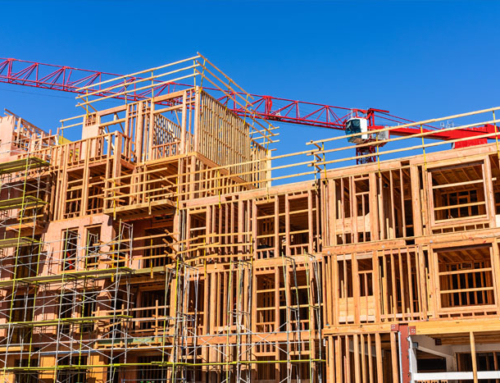
For years, the state legislature treated factory-built housing and its potential to cut costs as a policy unicorn – interesting in theory, but a non-starter when it came to streamlining approvals or aligning state programs to help it scale. This is changing: the Select Committee on Housing Construction Innovation, led by Appropriations Committee Chair Buffy Wicks (D-Oakland), conducted two substantive informational hearings on construction innovation.
This committee was tasked by Speaker Rivas (D-Salinas) in the fall with exploring modern, cost-efficient, climate-smart construction, including modular factories, industrialized construction sites, and 3D-printing demonstration projects. At the committee’s first hearing on January 6, 2026, developers and innovators shared real-world results: modular housing cuts costs by 20% and shortens timelines by roughly 25%, and emerging tools such as 3D concrete printing can reduce waste, address labor shortages, and build more resilient housing. The message was sober: these methods are not silver bullets, and cost savings can be offset by logistics costs such as transportation and coordination. However, it is worth exploring: factory-built housing can also cause less disruption for surrounding neighbors, with fewer months of noise, dust, and truck traffic.
The second hearing, on January 14, 2026, explored how to scale these approaches beyond pilots, and the answer required collaboration across state agencies, investors, and labor. Agencies outlined that financing and climate programs can reduce risk for cities and developers, while investors stressed that innovative construction needs more flexible capital to work at scale. Notably, labor showed up in support: building trades leaders emphasized workforce growth and training pathways and highlighted that factory-based work can mean more stable, safer jobs, including opportunities for women who do not wish to travel to multiple job sites.
Looking ahead, the Terner Center provided a clear roadmap: (1) building code reform, (2) de-risking strategies, (3) aligning state programs and financing, and (4) education, data, and research to make innovation scalable in California.
Housing Initiatives on the Horizon
Several themes are emerging in sponsored bill proposals, offering a sense of the year’s key housing initiatives. These include increasing transparency around impact fees, creating exemptions for more innovative building standards that will reduce construction costs, increasing homeownership opportunities at all income levels, and adopting additional reforms to the Density Bonus Law to incentivize the construction of more for-sale and moderate-income units.
Additional ideas may arise from the State Auditor’s recently released report on the Department of Housing and Community Development (HCD). Titled 2024-109 California Department of Housing and Community Development, the audit evaluated HCD’s oversight of local jurisdictions’ submissions of housing elements and HCD’s procedures for reviewing housing elements. The audit found that HCD’s findings letters generally provided valuable feedback to local jurisdictions; however, jurisdictions that are struggling to develop compliant housing elements also required individualized assistance, particularly given the complexity of housing element law. The audit concluded with eight recommendations, including further staggering of housing element submissions, a transition period for new housing element laws, and the offer of scheduled meetings for local jurisdictions.
Taken together, these developments reflect a legislature grappling with how to expand housing opportunity in a constrained fiscal environment while modernizing the tools available to do so. With limited new funding on the table, attention is shifting toward bonds, regulatory reform, construction innovation, and stronger state oversight to boost production and enhance accountability. As proposals continue to evolve – and new ideas emerge from audits, select committees, and sponsored bills – the coming months will reveal whether Sacramento can translate these conversations into durable policy gains that meaningfully increase housing supply and affordability across the state.
© LeSar Holdings/LeSar Development Consultants. All Rights Reserved. Please be advised that any republishing of copyrighted material provided by our organization, in whole or in part, requires prior written authorization. For permission, please reach out to [email protected]. We appreciate your understanding and compliance in upholding copyright laws.

Related Articles














About the Author