


Federal housing and homelessness policy is increasingly being shaped not only by Congress and the Administration, but also by the courts. In recent weeks, several federal courts have issued decisions limiting the Administration’s ability to alter how congressionally appropriated housing and homelessness funds are distributed or conditioned. Taken together, these cases raise broader questions about the extent of executive authority over federal housing programs and the role of Congress and the courts in determining how those programs operate.
Courts Challenge Changes to Continuum of Care Funding
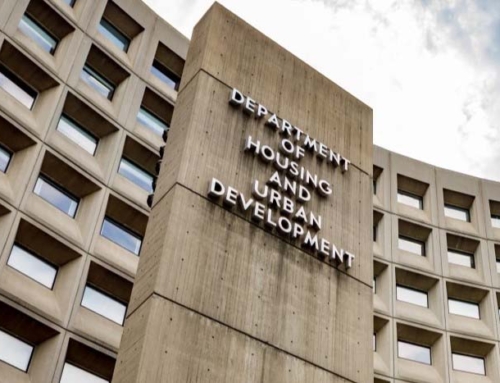
The most consequential litigation for homelessness systems continues to center on HUD’s Continuum of Care (CoC) program. In 2025, HUD substantially changed the program’s funding framework, including reducing the share of funding available for permanent housing renewals and introducing new eligibility and prioritization requirements. A coalition of states and homelessness organizations challenged the changes, arguing that HUD had exceeded its statutory authority and failed to follow required administrative procedures.
In April, the First Circuit Court of Appeals upheld an injunction preventing HUD from implementing key elements of its revised CoC funding approach. The court concluded that HUD’s changes raised substantial legal concerns under the governing statute and the Administrative Procedure Act.
The litigation has continued as HUD issued a new FY 2026 CoC Notice of Funding Opportunity in June. On August 7, a federal judge again blocked portions of HUD’s revised funding criteria, finding that the agency had not followed the required administrative process. The decision creates additional uncertainty for communities preparing for the next round of CoC funding, particularly those that rely heavily on permanent supportive housing.
The situation matters especially for California, where CoCs have made significant investments in permanent supportive housing and other permanent housing interventions. HUD has continued to defend its approach and has appealed earlier adverse decisions, arguing that the revised policies are necessary to address issues including encampments, substance use, and public safety.
Ninth Circuit Limits Conditions on Federal Grants
A separate case has broader implications for how the federal government can attach policy conditions to housing and other federal grants. On August 25, the Ninth Circuit Court of Appeals ruled that the Administration could not impose new conditions on federal transportation and homelessness grants requiring recipients to align with federal positions on issues including immigration, abortion, and gender identity. The court concluded that the conditions exceeded the agencies’ statutory authority and conflicted with Congress’s role in determining how federal funds are distributed.
The case, County of King v. Turner, was brought by 31 local governments, including several in California. The decision largely upheld an injunction preventing the Administration from enforcing the conditions. Importantly, the ruling does not prevent the federal government from enforcing legitimate statutory requirements; rather, it limits the ability of federal agencies to use grant conditions to impose additional policy requirements that Congress did not authorize.
The Administration could seek review by the Supreme Court, making this a case worth watching as the Court begins its next term. More broadly, the decision could become an important precedent in determining how much discretion executive agencies have to attach new conditions to federal funding after Congress has appropriated the funds.
Fair Housing Funding Also Faces Court Challenge
The courts are also weighing changes to HUD’s Fair Housing Initiatives Program (FHIP), which provides grants to nonprofit organizations that investigate housing discrimination, conduct testing and outreach, and help enforce fair housing protections. In July, HUD proposed a substantially different approach to distributing FHIP funds that would have reduced the number of organizations receiving grants and imposed new eligibility requirements. More than 100 organizations that have historically participated in the program faced the prospect of losing federal support.
On August 26, a federal judge in Massachusetts blocked HUD’s restructuring of the program, finding that the Department had not provided an adequate explanation for its significant changes to the longstanding funding structure. The decision preserves the existing funding framework while the litigation continues. Approximately $56 million in congressional funding is at issue.
The case illustrates another emerging theme in federal housing policy: while Congress may appropriate funding for a program, disputes are increasingly arising over the amount of discretion HUD has in distributing the funds.
A Broader Question About Federal Housing Policy
These cases are occurring against the backdrop of the recently enacted 21st Century ROAD to Housing Act, Congress’s most significant bipartisan housing legislation in decades, which expanded and modernized federal housing tools.
For housing and homelessness systems, the immediate consequence is uncertainty. Even when Congress appropriates funding, changes in federal policy can affect the speed with which funding reaches communities, activities deemed eligible, and requirements that must be met. The recent court decisions suggest that agencies may face limits when attempting to substantially redirect congressionally authorized programs without clear statutory authority or the administrative procedures required by law.
The coming months will therefore be important not only for the implementation of the ROAD Act, but also for the continuing litigation over HUD’s homelessness, fair housing, and grant-making policies. For California communities, particularly those dependent on CoC funding and other federal housing resources, the outcomes could have significant implications for how existing programs are funded and administered in the years ahead.
© LeSar Holdings/LeSar Development Consultants. All Rights Reserved. Please be advised that any republishing of copyrighted material provided by our organization, in whole or in part, requires prior written authorization. For permission, please reach out to [email protected]. We appreciate your understanding and compliance in upholding copyright laws.

Related Articles















About the Author