


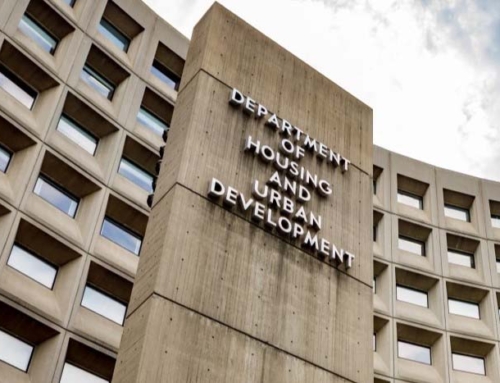
Federal homelessness policy is entering a period of significant change as the U.S. Department of Housing and Urban Development (HUD) moves forward with a substantially revised approach to its Continuum of Care (CoC) program. The FY 2026 CoC competition, which reopened in September following a court challenge, provides the first major test of these changes. HUD has made more than $4 billion available through the competition to fund housing and supportive services for people experiencing homelessness across the country.
A New Direction for CoC Funding
On June 1, 2026, HUD released its FY 2026 CoC Notice of Funding Opportunity (NOFO), making approximately $4.04 billion available through the program. The NOFO represents a significant shift in federal homelessness policy, placing greater emphasis on transitional housing, supportive services, behavioral health treatment, and employment. HUD has said the changes are intended to move away from what the department views as an overreliance on the Housing First model and toward approaches that address recovery and self-sufficiency.
One of the most consequential changes is the allocation of $1.3 billion for new projects, with HUD prioritizing transitional housing and Supportive Services Only (SSO) projects, defined as projects that provide supportive services to people experiencing homelessness without the provision of housing. Eligible activities include behavioral health treatment, job training, education, case management, childcare, and other services. The NOFO also doubles funding for projects serving survivors of domestic violence and expands opportunities for faith-based organizations to participate in CoC activities. The agency is accepting public comments on those proposed activities through October 13.
The new structure also changes the competition for renewal funding. The FY 2026 NOFO sets the Tier 1 renewal threshold at 60% of a community’s Annual Renewal Demand (ARD), compared with 90% under the FY 2024 competition. This leaves a larger share of existing projects subject to competition for the remaining funds. The National Low Income Housing Coalition (NLIHC), citing analysis from the National Alliance to End Homelessness, estimates that at least 97,000 people currently living in permanent housing could be at risk of losing their housing under the new funding structure.
Litigation and the FY 2026 Competition
The changes quickly became the subject of litigation. On August 7, a federal district court in Rhode Island ruled that HUD could not establish the new transitional housing and Supportive Services Only set-aside without going through the required notice-and-comment process. The court subsequently vacated the FY 2026 NOFO, temporarily preventing HUD from proceeding with the competition.
On September 16, however, the U.S. Court of Appeals for the First Circuit granted HUD an emergency stay pending appeal, allowing the department to proceed with the competition while the underlying litigation continues. The court cited the need for HUD to make CoC awards by December 1 and concluded that delaying the competition could create funding gaps.
Following the appellate court’s decision, HUD reopened the FY 2026 competition on September 18. The agency states that the NOFO is otherwise unchanged, with the primary changes being a new application deadline and a technical correction reducing the required notification period for project applicants from 15 days to seven days. HUD also issued a waiver allowing private nonprofit applicants, recipients, and subrecipients to administer rental assistance. The nationwide application deadline was September 30, 2026, at 8:00 p.m. ET.
The result is an unusually compressed competition. CoCs had begun preparing applications under the revised funding framework before the district court halted the competition. Following the First Circuit’s decision, HUD reopened the competition and provided an additional 12 days for communities to finalize their applications. The funding process is therefore moving forward while the underlying legal challenge remains unresolved.
Los Angeles Adds a Second Legal Challenge
For California, the FY 2026 competition has become intertwined with a separate legal dispute over HUD’s suspension of the Los Angeles Homeless Services Authority (LAHSA). HUD suspended LAHSA in June and subsequently indicated that the Los Angeles Continuum of Care, CA-600, could be subject to a direct-to-HUD application process. HUD later extended the FY 2026 application deadline for Los Angeles-area applicants from September 30 to October 14 to provide additional time while the litigation proceeded.
That situation changed again on September 24. The U.S. Court of Appeals for the Ninth Circuit largely denied HUD’s request to stay a lower-court injunction blocking the suspension of LAHSA while the case proceeds. The Ninth Circuit found that HUD had not demonstrated a likelihood of success in challenging the injunction and emphasized the timing of the suspension relative to the region’s federal funding application. The ruling allows LAHSA to continue serving as the Los Angeles CoC’s Collaborative Applicant for the FY 2026 competition, as well as continuing its roles overseeing the Homeless Management Information System, Coordinated Entry System, and annual Point-in-Time count while the litigation continues.
The ruling also addresses previously approved federal funding. The Ninth Circuit upheld provisions requiring HUD to execute and release FY 2025 CoC grants according to the standard statutory schedule. With respect to approximately $239 million in FY 2026 funding, however, the court granted HUD limited relief, clarifying that the lower court’s order should not be interpreted as requiring the funds to be disbursed before they are otherwise due under the federal appropriations schedule. LAHSA’s summary of the Ninth Circuit ruling
For the immediate FY 2026 competition, the ruling means that LAHSA can proceed with the region’s consolidated application rather than requiring individual providers to apply directly to HUD. LAHSA has said it is moving forward with the application, which is due October 14. The underlying dispute over whether HUD lawfully suspended LAHSA has not been resolved; the Ninth Circuit is scheduled to hear oral arguments on HUD’s appeal of the preliminary injunction on October 19.
What Comes Next
Taken together, the revised NOFO, the litigation surrounding it, and the separate dispute over Los Angeles’ CoC administration make FY 2026 just another annual funding cycle. It is the first opportunity to see how HUD’s revised homelessness strategy translates into funding decisions at the community level. The resulting awards, along with the continuing legal challenges, will provide an early indication of how the federal government’s changing priorities affect the balance among permanent housing, transitional housing, supportive services, and other approaches to addressing homelessness.
© LeSar Holdings/LeSar Development Consultants. All Rights Reserved. Please be advised that any republishing of copyrighted material provided by our organization, in whole or in part, requires prior written authorization. For permission, please reach out to [email protected]. We appreciate your understanding and compliance in upholding copyright laws.

Related Articles
















About the Author