

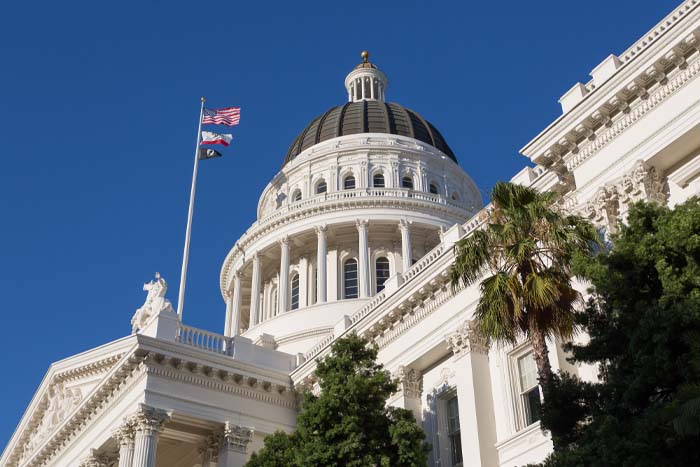
The Legislature reconvened on August 3rd after its summer break with an eye on a continued push to address housing production and costs. The last day for each house to pass bills is August 31, with September 30 being the last day for the Governor to sign or veto bills that have been passed.
2026 has already been a robust year for housing considering:
- An additional $1.7 billion in housing and homelessness resources and incentives to reduce local development impact fees were enacted through the recently passed state budget.
- The placement of an $11.25 billion bond on the November ballot.
- The official launch of a standalone Housing and Homelessness Agency.
- Reform of the housing finance delivery system through the Housing Development and Finance Committee as a true “One Stop Shop”.
Even with these accomplishments, many bills still remain in consideration. The most highly debated is likely a measure from Senator Wiener seeking to provide enhanced streamlining to already approved housing projects. The bill has already been amended five times this year, evidence of attention that it has been receiving from industry groups. Another high-profile measure seeking to pass in August is AB 1903 (Wicks, D-Oakland), which seeks to amend California’s 24-year-old Residential Construction Defect Law that is often cited by developers as a deterrent to building housing. Prior attempts to amend the law have failed, making this a bill to watch in the final month of the Legislative session.
Assemblymember Wicks also continues her push to assist factory-built housing following her hearings from the Select Committee on Housing Construction Innovation. Her AB 1815 (Wicks, D-Oakland) would support factory-built housing by limiting local jurisdictions’ ability to impose building standards that exceed the state’s.
Additional measures still alive in the process include:
AB 1732 (Alvarez, D-Chula Vista): Expands an existing California Environmental Quality Act (CEQA) statutory exemption for infill affordable housing to include qualifying public university and community college housing projects, allowing those projects to proceed without environmental review if they meet specified labor, location, and environmental standards.
AB 2433 (Alvarez, D-Chula Vista): Streamlines approvals for projects that meet CEQA exemption and density bonus.
AB 2480 (Ávila Farías, D-Concord): Requires a local government to provide an additional density bonus for student housing developments that meet a minimum affordability threshold and provide additional units for moderate-income students.
AB 2020 (Gabriel, D-Encino): Would allow affordable housing developers to move project reserves across their portfolios to stabilize projects under extreme financial pressure.
AB 2074 (Haney, D-San Francisco): Would create a new, lower-cost financing option for high-rise residential developments near major regional transit hubs through a new revolving loan fund.
SB 328 (Grayson, D-Orinda): Would limit fees charged by the State for hazardous waste remediation.
AB 2748 (Quirk-Silva, D-La Palma): Eases obligations for affordable housing approved between 2025 and 2030 from electric vehicle charging receptacle installation requirements.
SB 1117 (Cervantes, D-Riverside): Would change how jurisdictions calculate impact fees for ADUs, allowing fees only for units greater than 750 square feet.
AB 2089 (Ward, D-San Diego): Extends the sunset on provisions in the welfare exemption for affordable rental housing that received Low Income Housing Tax Credits to maintain eligibility when a tenant’s income increases to 140% of Area Median Income.
The team continues to watch developments on both the legislative and executive fronts as the session approaches its close and the November elections draw near.
© LeSar Holdings/LeSar Development Consultants. All Rights Reserved. Please be advised that any republishing of copyrighted material provided by our organization, in whole or in part, requires prior written authorization. For permission, please reach out to [email protected]. We appreciate your understanding and compliance in upholding copyright laws.

Related Articles













About the Author