

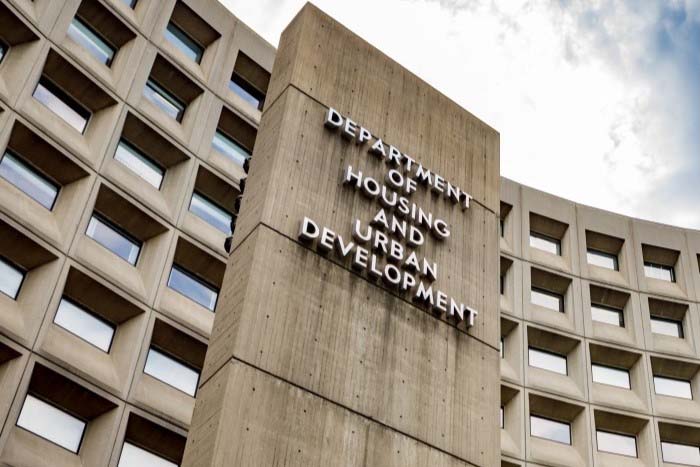
The Administration’s FY 2027 budget request, released in April, proposed eliminating funding for the HOME Investment Partnerships Program (HOME) and the Community Development Block Grant (CDBG) program, restructuring HUD’s Homeless Assistance Grants, and imposing work requirements and time limits on households receiving rental assistance.
The House Appropriations Committee approved its FY 2027 Transportation, Housing and Urban Development (THUD) bill on June 3 by a 34–27 vote. The bill would provide HUD with $71.4 billion, roughly 8% below the $77.3 billion enacted for FY 2026. While the House bill declined several of the Administration’s most significant proposals, including the work requirements and time limits and the elimination of HOME and CDBG, it would reduce or hold flat funding for most HUD programs.
The Senate Appropriations Committee has not yet released its THUD bill, though a proposal is expected soon. Its release will offer the clearest indication yet of where a final House–Senate agreement may land.
Key Programs at Stake
The House bill’s proposed funding levels for programs of particular relevance to California are summarized below.
| Program | House FY 2027 proposal | Change from FY 2026 enacted |
| Tenant-Based Rental Assistance (Voucher Renewals) | $35.4B | +$496M |
| Tenant Protection Vouchers | $300M | –$301M |
| Continuum of Care | $3.78B | –$232M (-5.7%) |
| Emergency Solutions Grants | $290M | Level |
| Public Housing Capital Fund | $2.28 billion | –$914M (-29%) |
| HOME | $500 million | –$750M |
| CDBG | $3.3 billion | Level |
For rental assistance, the central question is whether funding keeps pace with rising rents. Because voucher costs increase each year, a modest increase can still mean fewer households served. The Center on Budget and Policy Priorities estimates that the House funding level would result in about 471,000 fewer people receiving vouchers in 2027. Housing advocates have also raised concerns about the reduction in Tenant Protection Vouchers, which Congress increased in FY 2026 in part to help public housing agencies continue serving the more than 46,000 households still relying on Emergency Housing Vouchers.
For homelessness programs, the House bill did not adopt the Administration’s proposal to fold the Continuum of Care (CoC) program into an expanded Emergency Solutions Grants program. However, its proposed CoC reduction would come on top of the significant changes HUD has made to the FY 2026 CoC competition, which shifted a substantial share of funding toward transitional housing and supportive services.
For affordable housing production, the proposed $750 million reduction to HOME is the most consequential change. HOME is a key source of gap financing for affordable housing developments, and its funds flow both to the state and to dozens of California cities and counties that receive allocations directly.
Policy Questions Beyond Funding Levels
The final bill will also carry policy language that may matter as much as the dollar amounts. During its June markup, the House committee adopted amendments that would block HUD funding to jurisdictions that do not cooperate with federal immigration enforcement, direct HUD to continue assisting families with mixed immigration status, and eliminate Build America, Buy America requirements for HOME, CDBG, and several other programs. The House bill also proposes rescinding unobligated balances from several FY 2025 HUD accounts.
Housing organizations are also urging Congress to use the final bill to address how appropriated funds are administered. A key focus is a proposed Office of Management and Budget (OMB) rule, the Regulation for Federal Financial Assistance, which would give the Administration broader authority to suspend or terminate grants when recipients’ programs conflict with its policy positions. The current CR delays implementation of the rule until December 11, and NLIHC and its partners are asking appropriators to block it permanently. Advocates are also seeking language to protect CoC funding from further administrative changes and to limit the Administration’s ability to withhold or rescind funds Congress has appropriated.
These requests reflect a theme that has run through federal housing policy this year: Congress may set funding levels, but recent court challenges have increasingly centered on how much discretion HUD has in distributing those funds.
What to Watch in December
The FY 2027 funding decisions will also shape the early impact of the 21st Century ROAD to Housing Act. The law authorizes, but does not appropriate, funding for 14 new or expanded programs, including an Innovation Fund of up to $200M per year for communities that increase housing supply and a $100M HOME-based program to convert vacant and abandoned buildings into housing. Some of these programs could begin with FY 2027 appropriations, but many may not be funded until FY 2028. Whether Congress funds them, and whether it does so without reducing existing programs, will be an early test of the law’s practical reach.
For California housing practitioners, several milestones are worth tracking in the coming weeks:
- The Senate THUD bill, whose funding levels will frame negotiations with the House.
- The December 11 deadline, when Congress must pass full-year bills, another CR, or face a partial shutdown. A longer-term CR would hold most programs at FY 2026 levels, which advocates note effectively acts as a cut as costs rise.
- The midterm results, which will determine the makeup of the next Congress and could change leadership of key housing committees ahead of FY 2028.
- Policy riders on immigration enforcement, the OMB grant rule, and protections for CoC funding, each of which could affect how California jurisdictions access federal housing resources.
While the CR has provided near-term stability, the coming weeks will determine whether FY 2027 brings continuity for core housing and homelessness programs or further narrows the federal role, as the ROAD Act’s new tools await their first funding.
© LeSar Holdings/LeSar Development Consultants. All Rights Reserved. Please be advised that any republishing of copyrighted material provided by our organization, in whole or in part, requires prior written authorization. For permission, please reach out to [email protected]. We appreciate your understanding and compliance in upholding copyright laws.

Related Articles
















About the Author