

Around the world, cities are searching for solutions to the housing crisis, and communities are grappling with many of the same questions: How do we leverage public land more effectively? How do we create housing that serves middle-income as well as lower-income households? How do we build infrastructure alongside growth? And what is the role of the public sector in creating housing systems that remain affordable for generations?
While no two communities are the same, some have developed approaches that challenge conventional thinking and offer valuable lessons for leaders everywhere.
For nearly a century, Vienna has demonstrated that housing affordability is not the product of a single policy or funding source – it is the outcome of a system designed to endure.
Rather than viewing housing as a series of individual developments, Vienna has built an integrated ecosystem where public land, planning, infrastructure, finance, and long-term public stewardship work together to create vibrant, mixed-income neighborhoods that remain affordable across generations.
The Global Policy Leadership Academy Vienna Social Housing Field Study offers a chance to explore this model – not to replicate it, but to discover innovative ideas, strategies, and leadership practices that can drive action in other communities.
Over six immersive days, participants engage directly with the planners, architects, housing organizations, researchers, and practitioners who shape one of the world’s most admired housing ecosystems. Through site visits, candid conversations, and peer learning, delegates return with fresh perspectives, practical ideas, and a broader understanding of what is possible.
Building Housing Systems that Last
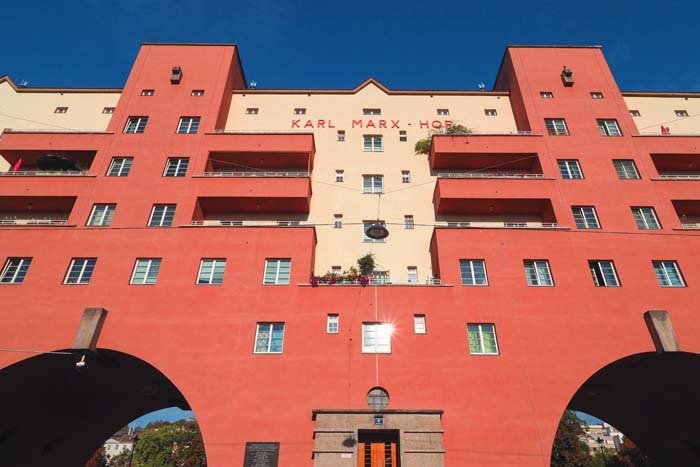
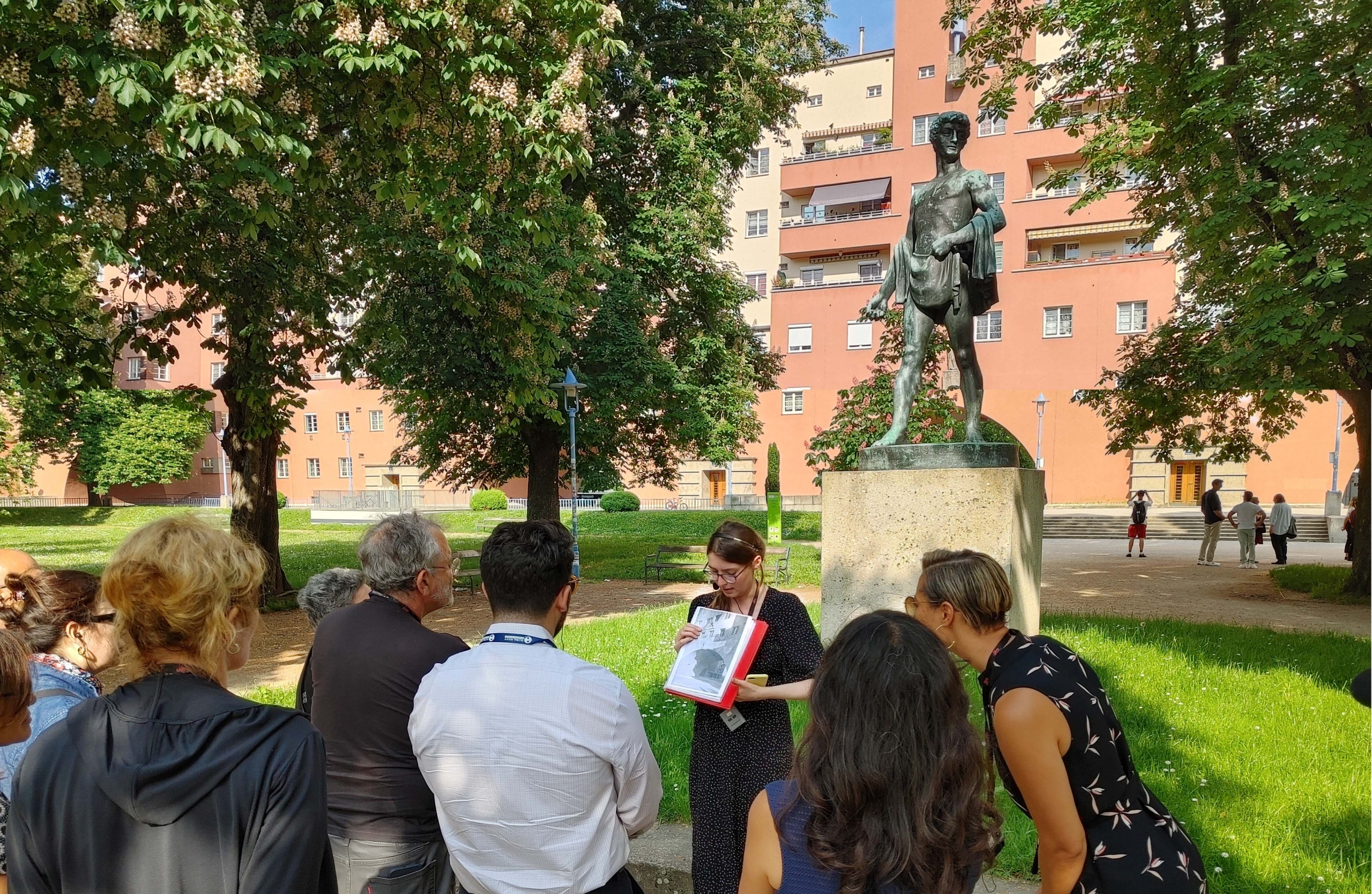
Field Study participants visit Karl-Marx-Hof (aka “The Workers’ Versailles”), one of Vienna’s approximately 400 Gemeindebau - city-owned, municipally built social housing estates first created after WWI in response to poor living conditions and widespread poverty. At the time of construction, development was known for featuring private balconies, indoor toilets, running water, and green courtyards, amenities typically reserved for the aristocratic class. It is still home to thousands today, with modern amenities including nurseries, a youth center, library, health clinic, cafes, and more.
Throughout the field study, participants will examine five enduring insights that continue to shape one of the world’s most successful housing systems.
#1: Public Land Is the Foundation of Long-Term Affordability
What if public land were viewed not as surplus real estate, but as one of a community’s most valuable long-term assets? Vienna treats public land as civic infrastructure that creates lasting public value. Through strategic acquisition, stewardship, and long-term planning, public land becomes the foundation for affordable and mixed-income housing, rather than a short-term financial asset to be sold.
As communities across North America explore ways to activate publicly owned land, delegates will examine how thoughtful land policy can shape stronger communities long before the first building is constructed.
#2: Mixed-Income Housing Strengthens Communities
Housing affordability has become a middle-income challenge as much as a low-income one. Teachers, nurses, first responders, young professionals, seniors, and working families are increasingly struggling to find homes they can afford.
Vienna recognizes that thriving communities depend on serving a broad range of incomes. By integrating affordable, middle-income, and market-rate housing within complete neighborhoods, the city has created places that are economically resilient, socially connected, and broadly supported by the public.
The lesson extends beyond housing policy: it is about creating communities where people from different backgrounds and income levels can live, work, and thrive together.
#3: Planning Creates Communities Before Housing Creates Neighborhoods
Great neighborhoods don’t happen by accident. Housing is planned alongside transit, schools, childcare, parks, utilities, public spaces, and neighborhood services. Infrastructure and housing are conceived as a single strategy, creating complete communities rather than isolated developments.
For leaders facing rapid growth, the lesson is clear: housing policy and infrastructure planning must go hand in hand.
#4: Public Stewardship Shapes Long-Term Success
Perhaps Vienna’s most enduring lesson is the role of government.
The public sector is more than a regulator or funding source. It serves as a long-term steward of land, investment, partnerships, design quality, and community outcomes. Through consistent leadership over decades, the city has built institutions capable of delivering housing affordability at scale.
This perspective invites an important question for leaders everywhere:
What becomes possible when government sees itself not simply as approving projects, but as stewarding places?
#5: Housing Is a System
Lasting affordability is rarely created by a single funding source, one innovative financing program, or one successful development. It emerges when public land, infrastructure, planning, finance, governance, and leadership reinforce one another over time.
That systems perspective is the defining focus of the GPLA Vienna Social Housing Field Study. Participants leave not with a blueprint to copy, but with a systems framework they can adapt – one that helps leaders ask better questions, forge stronger partnerships, and design housing solutions that endure.
Who Should Attend the GPLA Vienna Social Housing Field Study?
This executive learning experience is designed for:
- Elected officials
- City and county executives
- Housing authorities and regional housing finance agencies
- Education leaders
- Planning and community development professionals
- Housing developers
- Philanthropic and nonprofit leaders
- Civic leaders committed to expanding housing opportunities
Join Us in Vienna!
The future of housing will be shaped by leaders who can think beyond individual projects and understand how public land, infrastructure, finance, governance, and public leadership work together as a system.
If you’re ready to broaden your perspective, challenge conventional thinking, and join a community of leaders committed to building housing systems that last, we invite you to join us in Vienna.
Vienna Social Housing Field Study
September 13–19, 2026
Registration closes August 7, 2026.
For more information or to reserve your place, contact Anu Natarajan at [email protected].
© LeSar Holdings/LeSar Development Consultants. All Rights Reserved. Please be advised that any republishing of copyrighted material provided by our organization, in whole or in part, requires prior written authorization. For permission, please reach out to [email protected]. We appreciate your understanding and compliance in upholding copyright laws.

Related Articles















About the Author