

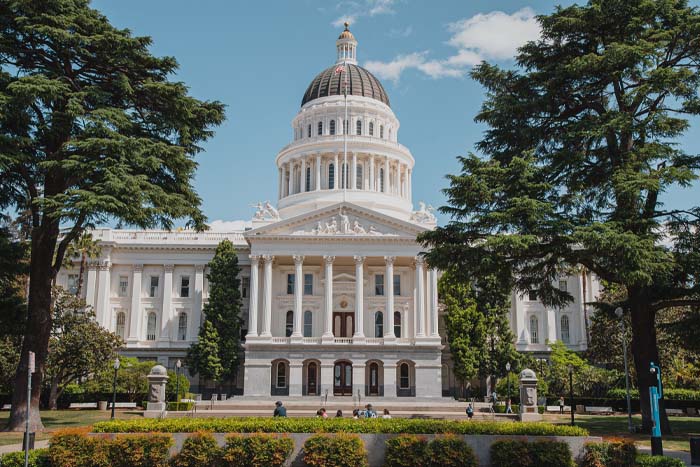
As the end of a two-year legislative session concludes, Governor Newsom continues to take action on bills that have advanced out of the Legislature and to his desk for consideration. Emphases on affordability and how newly signed legislation helps California households and communities is a consistent theme from Governor Newsom’s press office as bills are signed before the September 30 deadline.
Overshadowing the impacts of new legislation may be the fate of Proposition 1, the $11.25 billion Veterans and Affordable Housing Bond Act of 2026. The resources in Proposition 1 will have the most significant impact on affordable housing production for years to come, more than any other single piece of legislation. Still, many other measures just signed into law are significant, including:
Removing Development Barriers
- AB 1815 (Wicks, D-Oakland): Supports factory-built housing by limiting local jurisdictions’ ability to impose building standards that exceed the states.
- SB 963 (Laird, D-Santa Cruz): Streamlines the Coastal Development Permit appeals process by establishing clear deadlines for the California Coastal Commission to request information and make final decisions on appealed projects, providing greater certainty for housing and other coastal development.
- SB 1116 (Caballero, D-Merced): Expands and strengthens existing state law to make it easier to subdivide eligible urban lots and build smaller, lower-cost starter homes for homeownership, including townhomes and condominiums.
Reducing Development Cost
- AB 2044 (Petrie-Norris, D-Irvine): Requires proposed state building standards to include a complete estimate of compliance costs and underlying assumptions before the California Building Standards Commission can approve them, increasing transparency around the cost impacts of new building regulations.
- SB 1014 (Grayson, D-Orinda): Increases certainty for housing developers by requiring local governments to provide timely, upfront information about required onsite and offsite infrastructure improvements, helping prevent unexpected requirements and costs later in the permitting process.
- SB 1117 (Cervantes, D-Riverside): Changes how jurisdictions calculate impact fees for ADUs, allowing fees only for units greater than 750 square feet.
Increasing Resources
- SB 113 (Budget Trailer Bill): $94 million allocated to specific housing needs or projects in communities throughout the state.
- AB-750 (Quirk-Silva, D-La Palma): Allows HCD to provide loans or grants to financially “challenged” affordable housing developments to rehabilitate properties, replenish operating reserves, and preserve their long-term affordability.
- AB 2074 (Haney, D-San Francisco): Would create a new, lower-cost financing option for high-rise residential developments near major regional transit hubs through a new revolving loan fund.
- SB 417 (Limón, D-Goleta/Cabaldon, D-West Sacramento): Places an $11.25 billion Veterans and Affordable Housing Bond on the November 2026 ballot to fund affordable rental housing, supportive housing, homeownership programs, and housing assistance for veterans.
- SB 1091 (Caballero, D, Merced): Establishes the Community Anti-Displacement and Preservation Program for purposes of funding the acquisition and rehabilitation of unrestricted housing and attaching long-term affordability restrictions on the housing. This program would be funded out of proceeds from the passage of Proposition 1.
Streamlining Processes
- AB 956 (Quirk-Silva, D-La Palma): Expands ADU development by requiring streamlined, ministerial approval of up to two detached ADUs on lots with an existing or proposed single-family home, increasing housing opportunities in single-family neighborhoods.
- AB 1621 (Wilson, D-Suisun City): Reduces delays during the construction plan check process by streamlining post-entitlement building permit reviews and enforcing clear, predictable timelines once a housing project has been approved.
- AB 1751 (Quirk-Silva, D-Fullerton): Establishes the Missing Middle Townhome Ownership Act, which creates a streamlined, ministerial approval process for townhome developments on residentially zoned lots.
- AB 2089 (Ward, D-San Diego): Extends the sunset on provisions in the welfare exemption for affordable rental housing that received Low Income Housing Tax Credits to maintain eligibility when a tenant’s income increases to 140% of Area Median Income.
- AB 2433 (Alvarez, D-Chula Vista): Streamlines approvals for projects that meet CEQA exemption and density bonus law.
Reforming the Housing Finance System
- AB 179 (Budget Trailer Bill): Reforms and streamlines the state’s affordable housing finance system through a “one-stop shop” approach, reduces development costs and impact fees, extends homelessness funding and accountability measures, and supports investments including $500 million for state Low-Income Housing Tax Credits and $200 million for the Multifamily Housing Program.
- AB 2020 (Gabriel, D-Encino): Allows affordable housing developers to move project reserves across their portfolios to stabilize projects under extreme financial pressure.
- AB 2185 (Quirk-Silva, D-La Palma): Requires state housing and finance agencies to review and revise affordable housing program rules to remove barriers to and facilitate the use of factory-built housing, with the goal of lowering costs and accelerating affordable housing production.
Addressing Homelessness
- AB 1556 (Haney, D-San Francisco): Establishes standards for state-funded recovery housing for people experiencing or at risk of homelessness, requiring programs to align with Housing First principles while supporting substance-use recovery, relapse protections, and overdose prevention.
- AB 1924 (Gabriel, D-Encino): Requires the California Interagency Council on Homelessness to develop and publicly issue a statewide homelessness prevention strategy by July 1, 2028.
Supporting Student Housing
- AB 1732 (Alvarez, D-Chula Vista): Expands an existing California Environmental Quality Act (CEQA) statutory exemption for infill affordable housing to include qualifying public university and community college housing projects, allowing those projects to proceed without environmental review if they meet specified labor, location, and environmental standards.
- AB 2480 (Ávila Farías, D-Concord): Requires a local government to provide an additional density bonus for student housing developments that meet a minimum affordability threshold and provide additional units for moderate-income students.
- SB 916 (Ashby, D-Sacramento): Accelerates student housing development by allowing courts to require plaintiffs challenging public university student housing projects to post a bond to cover potential costs and damages from project delays.
A few other housing bills of note have not yet been signed or vetoed, though not being a part of Governor Newsom’s package of signed housing bills does not bode well and likely points to them being vetoed. These bills include:
- AB 2146 (Stefani, D-San Francisco): Requires the California Interagency Council on Homelessness to complete a statewide study of the Coordinated Entry System to identify barriers to connecting people with affordable housing by July 2028.
- SB 677 (Wiener, D-San Francisco): Enhances streamlining to already approved housing projects.
- SB 1388 (Durazo, D-Los Angeles): Establishes an Affordable Housing Risk Reduction Program within HCD to provide technical assistance and resources to affordable housing providers to reduce portfolio risk and help them secure more affordable insurance coverage.
This is a developing story; please check back for additional updates.
© LeSar Holdings/LeSar Development Consultants. All Rights Reserved. Please be advised that any republishing of copyrighted material provided by our organization, in whole or in part, requires prior written authorization. For permission, please reach out to [email protected]. We appreciate your understanding and compliance in upholding copyright laws.

Related Articles















About the Author